India’s supplement industry has exploded in recent years. From an estimated USD 3 billion pre-COVID, the market has surged to USD 5.2 billion in 2024, nearly doubling in just three years. Analysts project it will reach USD 12-13 billion by 2033, growing at a 12-13% CAGR.
This growth is fuelled by a massive mindset shift among urban consumers. Fitness is no longer niche, gyms are packed, protein shakes are mainstream, and people now understand that training + nutrition + supplementation = results.
The Brand Surge
With demand skyrocketing, the industry has seen an explosion of new players. Reports estimate that 50-70 new supplement brands have launched in India since 2022, that’s more than two new brands every month.
But here’s the catch: with opportunity comes opportunism. Many of these new entrants have adopted a “whatever-it-takes” attitude to cash in quickly, often at the expense of consumer safety.
Mislabelling Epidemic
Independent testing has revealed shocking results:
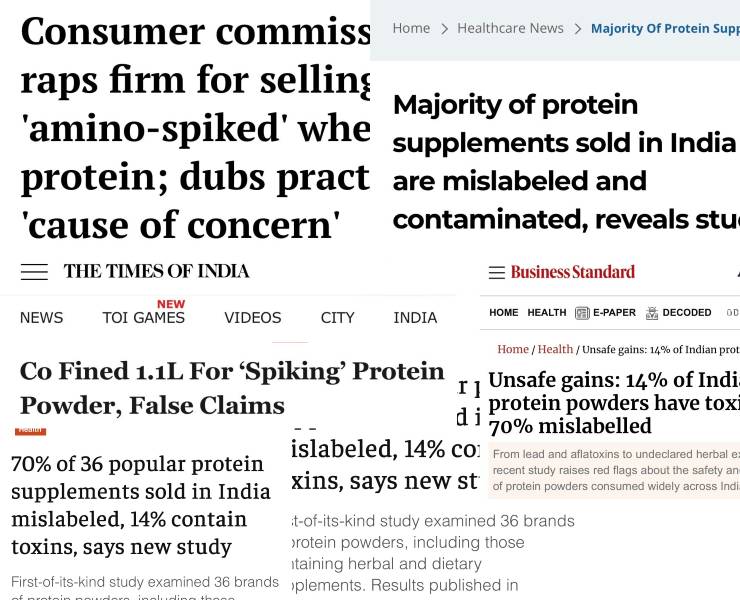
- The Citizens Protein Project (2024) tested 36 popular Indian protein brands and found that 70% had inaccurate protein content, often far lower than what the label promised.
- In 2024, BigMuscles Nutrition was fined by the Mumbai Consumer Commission for protein spiking, adding cheap amino acids to inflate protein values.
These cases highlight a trust deficit in the Indian supplement market. Consumers are increasingly sceptical, demanding transparency and proof before buying.
Amino Spiking: Still Common
Amino spiking, adding low-cost amino acids like glycine, taurine, or creatine to mimic protein levels, is alarmingly common in India, especially among budget protein powders.
Why? Because whey protein is expensive. Even giants like Glanbia (Optimum Nutrition), Danone, and Saputo, who control parts of the dairy supply chain, only enjoy a 5-10% cost advantage in manufacturing compared to competitors.
So when you see a local brand selling protein at dramatically lower prices, it’s almost certainly cutting corners. Nobody gets whey protein raw material “cheap.” If the price looks too good to be true, it probably is.
Omega-3 & Multivitamins: Not Immune
It’s not just protein powders.
- Omega-3 supplements: Several Indian fish oil brands have been flagged for low EPA/DHA content or oxidation/heavy metal contamination.
- Multivitamins: FSSAI surveillance has caught brands overstating or understating vitamin/mineral content. Imported high-dose formulas often exceed Indian limits, leading to seizures at customs.
My Personal Experience
Having been part of this industry for over 8 years, I’ve interacted with multiple brand owners and seen firsthand how they operate. One important lesson I learned: nobody gets a huge cost advantage on raw materials. Even the giants, Glanbia, Danone, Saputo, only differ by about 5-10% in whey protein manufacturing costs.
So when I see a local brand selling protein at half the price of established players, I know from experience that something isn’t right. In most cases, it’s either mislabelling, amino spiking, or poor-quality raw materials.
This is why I always advise consumers: stay away from “too cheap to be true” supplements. The risks to your health far outweigh the savings.
Consumer Checklist
Before buying any supplement, ask yourself:
- Why is this supplement so cheap compared to established brands?
- Do I trust this brand’s lab reports and certifications?
- Is this “too good to be true”?
Takeaway
India’s supplement industry is booming, but mislabelling and amino spiking remain rampant. Protein powders are the worst offenders, but omega-3 and multivitamins aren’t immune.
And remember: cheap supplements come at a cost, your health.